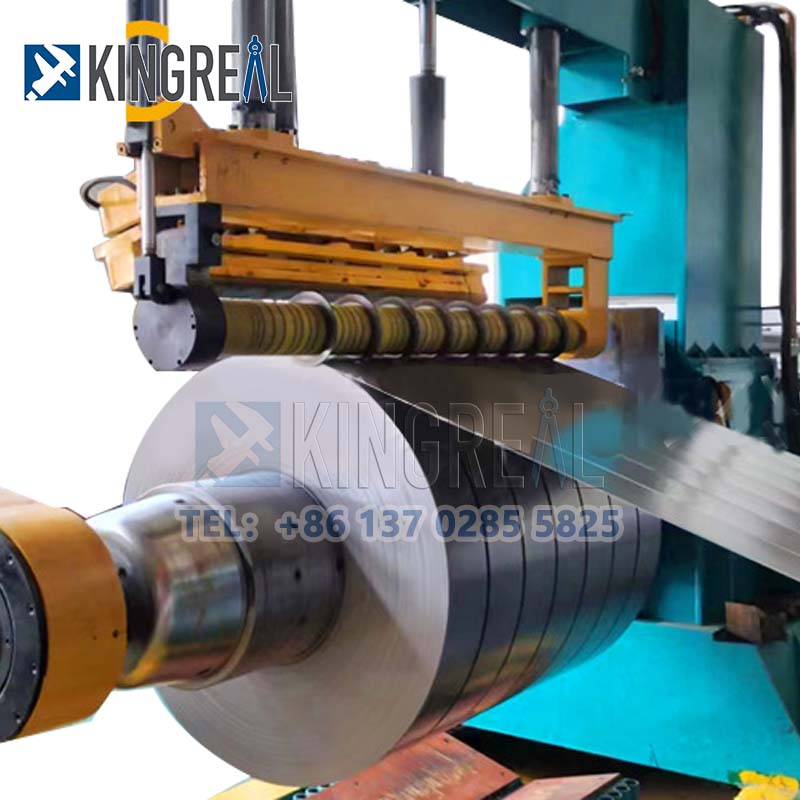


In the modern metal processing industry, the looping cut-to-length line effectively resolves challenges related to speed synchronization, tension control, and material buffering between processing units.

For today's large-scale, precision metal processing centers, high speed slitting lines, as core equipment in the coil processing field, significantly improve production efficiency while ensuring the flatness and dimensional accuracy of finished narrow metal strips throughout the process, balancing both capacity and quality requirements.

In the standardized workflow of a fully automated steel cut to length machine, the stacking process serves as the final stage of production. It plays a critical role in collecting and organizing the cut metal sheets, directly determining the line's overall capacity and production cadence. Many metal processing manufacturers currently face a common challenge: while modern steel cut to length lines feature high-speed, highly automated processes—including uncoiling, leveling, precision feeding, and shearing—the efficiency of the downstream stacking process lags behind, creating a significant production bottleneck. Inefficient stacking slows down the entire line, leading to issues such as upstream equipment idling, wasted capacity, and extended delivery times for batch orders.

Metal cross-cutting lines can complete the entire process of uncoiling, straightening, shearing to length, and stacking various specifications of cold-rolled steel, galvanized steel, aluminum, and stainless steel coils, producing standardized metal sheets. These sheets, mass-produced by leveling and cross-cutting lines, undergo secondary processing such as bending, painting, and assembly at various steel coil processing centers, ultimately being used in diverse downstream fields such as sheet metal manufacturing, curtain wall decoration, home appliance production, rail transportation, and hardware processing. In large-scale steel coil processing, surface scratches caused by the metal cross-cutting line process have always been a persistent and difficult-to-resolve production pain point for major steel coil processing centers in the industry.

With its unique oscillating dynamic shearing technology, the swing shear cut to length line can precisely and massively produce non-rectangular metal sheets such as trapezoids, parallelograms, and rhombuses, becoming a core sheet metal pre-processing equipment for automotive OEMs and Tier 1 and Tier 2 component suppliers.

The Automatic Steel Coil Package Line has emerged as a game-changer in modern steel processing industries. Companies like KINGREAL have developed advanced solutions that streamline coil handling, packaging, and logistics. This article explores the technology, benefits, applications, and operational insights, ensuring you understand why investing in an automatic coil line can drastically improve productivity and reduce operational costs.